New insurance data shows car theft and home break-ins are a growing problem right across Australia, with the cost of claims climbing in most states over the past few years. According to the Insurance Council of Australia, no state has been hit harder than Victoria, where a car is now stolen or broken into every 43 minutes and a home every two hours, making it the country’s worst state for both car theft and home invasion.
Whatever state you’re in, most break-ins and thefts follow the same predictable patterns, and the fixes are much the same too. Below we cover the security basics every home and car should have, plus a range of less obvious options worth considering.
How big is the problem, and where does it hit hardest?
Insurance claims for car theft have risen in most states since FY22, but the trend has diverged sharply in recent years. In NSW and Queensland, claim costs climbed steadily before levelling off or easing slightly over the past two years. In Victoria, the cost has kept climbing every year, reaching $244 million last financial year, more than every other state combined, and by far the nation’s highest.
The same pattern shows up in home break-ins. Victoria recorded 3,900 property theft claims last financial year worth $56 million, the highest of any state and almost double the next-worst, Queensland, with 2,300 claims worth $31 million.
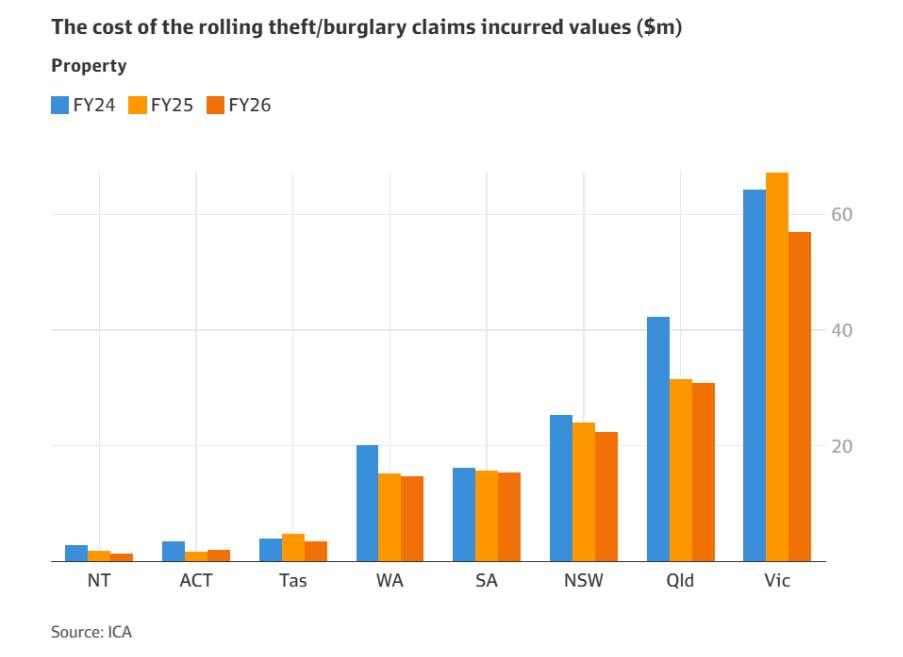
The takeaway for homeowners and drivers nationally is the same: theft and break-ins are a rising cost everywhere, so it is worth tightening up your security regardless of postcode, and especially so in Victoria, where the problem is currently most acute.
The basics every home still needs
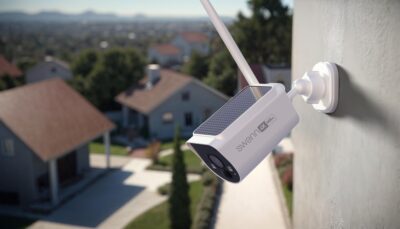
Before the clever stuff, get the fundamentals right. A monitored alarm system, quality deadlocks on all doors and windows, motion-sensor lighting around entry points, and a visible home CCTV system all reduce your chances of being targeted. Visible security cameras alone put off a large share of opportunistic offenders, simply because they raise the risk of being identified.
Six less obvious ways to protect your home
Beyond the basics, a few simple habits and low-cost additions make a real difference:
- Vary your lighting, don’t just time it. A single light on a timer looks exactly like what it is. Smart globes that change rooms and times each night look far more like someone is actually home.
- Fit window and sliding door sensors. Many break-ins happen through a smashed or forced sliding door rather than the front entrance, so covering these openings specifically closes a common gap.
- Get door and window alerts sent straight to your phone. A siren only helps if someone is close enough to hear it. A phone alert the moment a door or window opens gives you a head start, wherever you are.
- Keep garage remotes and spare keys out of sight, and out of the car overnight. Garages are often the easiest way into a house, and a stolen remote or spare key removes the need to break in at all.
- Join a local community alert network or app. Real-time alerts from neighbours about suspicious activity nearby often give the earliest warning of all.
- Store valuables and documents away from bedrooms. If an offender does get inside while people are home, this reduces the chance they end up near where family members are sleeping.
How to stop your car becoming a statistic
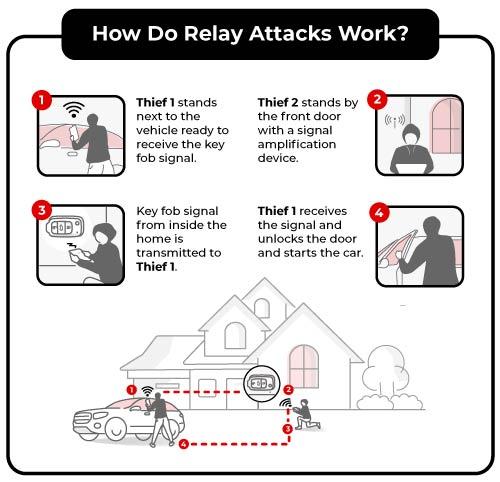
Car theft isn’t limited to older vehicles, and the tactics are increasingly the same nationwide. Many modern thefts target keyless entry cars using a technique called relay theft, where a device is used near your front door to pick up your key fob’s signal and relay it to the car parked outside, tricking it into unlocking. A simple faraday pouch or box for your keys, kept away from the front door and any exterior walls, blocks this signal completely and costs very little.
Other worthwhile car-specific measures include a visible steering wheel lock, an OBD port lock (many late-model cars are stolen by plugging into this port to program a new key), a hidden GPS tracker separate from any factory-fitted unit, and always parking in a locked garage where you have one. A dash cam angled to also capture the driveway can be a useful, low-cost extra set of eyes overnight.
Active deterrence and remote monitoring: the next step up
The biggest shift in home security over the past few years is active deterrence. Instead of a camera that only records footage for later, these systems detect a person approaching at night, trigger lights and an alert, and connect to a live monitoring operator who can speak directly through the camera to warn the person off before they attempt entry.
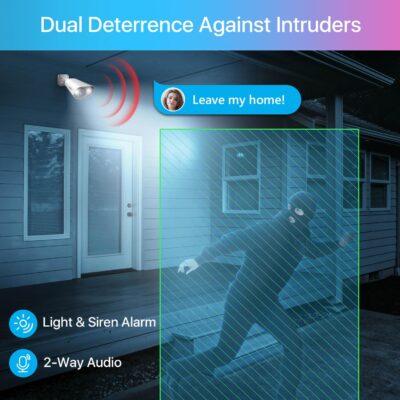
Combined with 24/7 remote monitoring, this turns your security system from a record of what happened into something that can actually interrupt an incident in progress. You can read more about how this works in our guide on how to deter thieves with CCTV.
Because these systems often include two-way audio and live talk-down features, it’s worth knowing that audio recording and monitoring are generally regulated more strictly than video, and the rules vary by state and territory. Check your own state’s requirements, or ask your installer, before switching on audio features.
Why professional installation matters
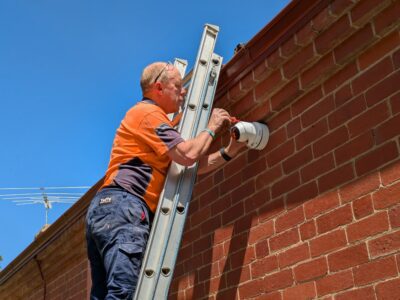
With theft and break-in costs rising nationally, and Victoria currently the worst affected state in the country, a poorly placed camera or a DIY alarm with gaps in coverage isn’t much of a deterrent. A professional installer will assess your specific property, choose cameras and sensors that actually cover your entry points and driveway, and set up monitoring correctly from day one. If you’d like an assessment of your own home or vehicle security, get in touch with Jim’s Security for a free quote.