If your alarm system still relies on a landline, a clunky keypad and no app, you don’t need to tear out your walls to fix it. There are two practical retrofit paths: a hybrid panel that reuses your existing wired sensors, or a fully wireless system that skips cabling altogether.
Either option gives you 4G/5G backup, Wi-Fi or LAN connectivity, camera-equipped motion sensors, and the ability to self-monitor and manage user PINs from your phone. Which path suits you best depends on your home and your existing wiring, so here’s how the two compare.
Signs your alarm system needs an upgrade
If your system only reports over a landline, has no smartphone app, needs an installer visit every time you want to change a user code, or the panel itself is an older discontinued model, it’s worth looking at a retrofit rather than a full rip-and-replace.
Option 1: Keep your wiring, upgrade the panel
A hybrid alarm panel, such as Hikvision’s AX Hybrid PRO range, is built to accept both your existing wired sensors and new wireless ones from the same control panel.

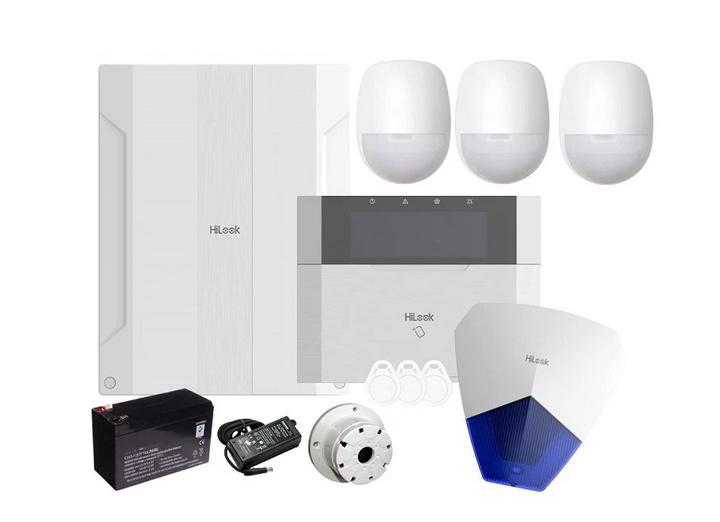
Your existing door and window sensors, cabling and wiring runs can generally stay in place, while the new panel brings the modern features with it.
This is a good middle-ground option if you want to modernise without the cost and disruption of rewiring, or if you want to add wireless sensors to hard-to-reach spots later without extending the existing cable runs.
Option 2: Go fully wireless
A fully wireless system, like Hikvision’s AX PRO or Dahua’s AirShield range, does away with cabling entirely. Sensors are battery-powered and communicate wirelessly with the panel, so installation is quicker and there’s no cutting into walls or ceilings to run new wire.


This is usually the more practical choice for a full retrofit, especially in a two-storey home. Running cable between levels in an existing house is disruptive and can mean patching walls and ceilings afterwards, which a wireless system avoids altogether.
What do the new features actually give you?
Here’s what each of the modern features means in practice.
- 4G/5G backup: your alarm can still communicate with the monitoring network over the mobile network if your internet or power goes down, rather than relying solely on a landline or your home broadband.
- Wi-Fi/LAN connectivity: connects the panel to your home network, which is what enables app-based control and notifications in the first place.
- Self-monitoring via a smartphone app: arm, disarm and check the status of your system remotely, and get alerts the moment something is triggered, without needing to go through a third-party monitoring centre if you don’t want to.
- Managing PINs from your phone: add a code for a cleaner or tradesperson, or remove one for a departing housemate, without booking an installer visit.
- Camera PIRs: motion sensors with a built-in camera, so when a sensor is triggered you get an image or short clip alongside the alert. You can visually check what set the alarm off from your phone, instead of only getting a text and wondering if it was the cat.
- Garage door control: monitor and, depending on the setup, open or close your garage door from the same app as your alarm.
- Stay mode using wireless door sensors: arm the perimeter of your home, typically the door and window reed switches, while leaving interior motion sensors disarmed. You can lock the doors and arm the system overnight or while you’re home, without triggering the alarm every time you walk through the house.
Which option suits your home?
If your existing wiring is in good condition and you mainly want the modern features without extra cost, a hybrid takeover is worth asking about. If you’re doing a full retrofit, particularly in a two-storey home where running new cable is impractical, a fully wireless system is typically the simpler and less disruptive path.

Get it installed properly
Getting the panel right is only half the job. Sensor placement, wireless signal coverage between floors, and correctly configuring the 4G/5G backup, camera PIRs and app connectivity all affect how reliably your system performs day to day.
A professional installer can also advise on which panel actually suits your existing sensors and home layout, since not every wired sensor is compatible with every hybrid panel, and not every accessory, such as a garage door controller, is supported on every model.
If you’re thinking about upgrading an ageing alarm system, Jim’s Security can assess your current setup and recommend the right retrofit option, whether that’s a hybrid takeover or a fully wireless system. You can also read more on alarm servicing and upgrades, or get in touch for a free quote.