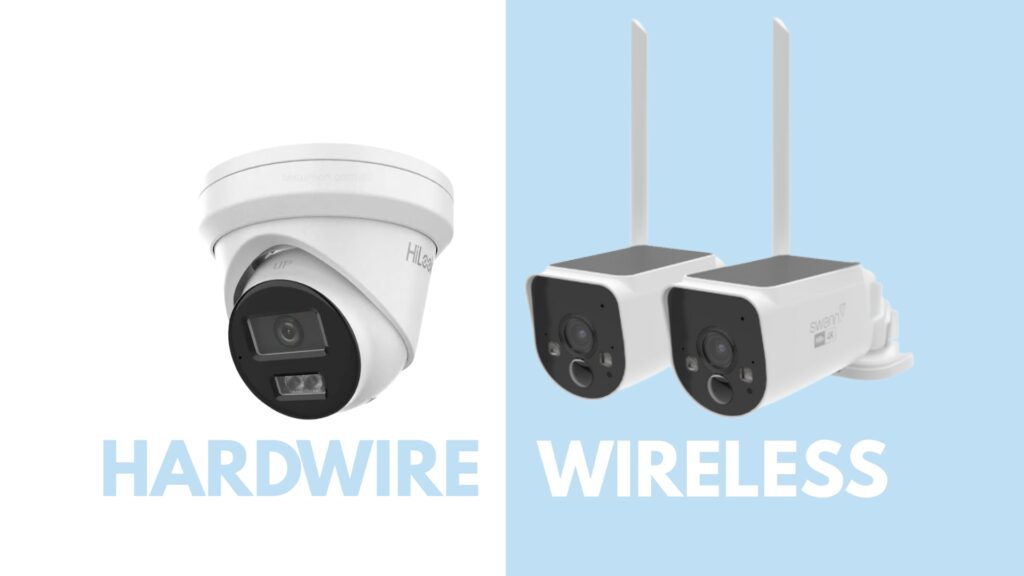
Jim’s Security installs thousands of CCTV systems every year, and our first recommendation is almost always a hardwired solution.
There’s a reason for that. Hardwired systems deliver reliability, continuous coverage, and long-term value. But not every property can accommodate cables and wiring. That’s where wireless solutions like the Swann Max Ranger come in, giving homeowners flexibility without sacrificing too much performance.
This article explains why we prefer hardwired systems, the trade-offs of wireless cameras, and how we make the right recommendation for each customer.
Why We Prefer Hardwired CCTV
Hardwired systems have a number of advantages that make them the go-to choice for most homes and businesses:
| Benefit | Why It Matters |
| Consistent, reliable power | No batteries to recharge and no solar panels affected by weather, ensuring uninterrupted operation. |
| Stable, dedicated connection | Doesn’t rely on home Wi-Fi, reducing interference and improving reliability. |
| Superior image quality | Higher resolution and smoother frame rates for clear, detailed footage. |
| Continuous recording | Captures activity around the clock, giving a complete and unbroken record. |
| Better storage and playback | Footage stored locally on a DVR/NVR, often without ongoing subscription fees. |
| Robust warranty coverage | Fewer variables in installation means full system support and peace of mind. |
| Long-term value | Built to last and perform day in, day out, providing lasting protection. |
When Hardwiring Isn’t Possible
Not every home or business can accommodate hardwiring. Common challenges include:
- Roof or building structure limitations: Some roofs types and materials make it very difficult to run cables (i.e. flat roofs without internal roof space, Colourbond/tin sheeting, heritage roofing, buildings without eaves). As a last resort we can use external conduit, but this is expensive and can be unsightly.
- Rental properties or heritage-listed buildings: Restrictions may prevent drilling, running wires, or altering the structure.
- Outdoor areas far from power sources: Running cables across long distances can be impractical or unsightly.
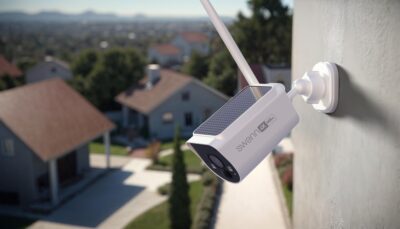
In these cases, a wireless camera solution may be the most practical option. Solutions like Swann Max Ranger overcome these challenges by providing reliable, independent connectivity without invasive installation.
We always discuss the trade-offs with our customers upfront because transparency and informed choices are what matter most.

The Realities of Wireless CCTV
While wireless cameras offer flexibility, there are some limitations to be aware of:
| Limitation | What It Means for You |
| Wi-Fi dependent | Performance relies on your home network; distance, walls, and interference can reduce reliability. |
| Event-based recording | Most systems record only when motion is detected, leaving gaps in coverage compared to continuous recording. |
| Battery or solar power | Batteries need regular recharging; solar panels can be affected by weather or shade. |
| Image quality | Resolution and frame rates are generally lower than hardwired systems, potentially reducing clarity. |
| Cloud storage costs | Accessing footage may require ongoing subscriptions. |
| Warranty coverage | Typically covers hardware only; external factors like Wi-Fi or weather affecting performance are not included. |
When We Go Wireless: Max Ranger
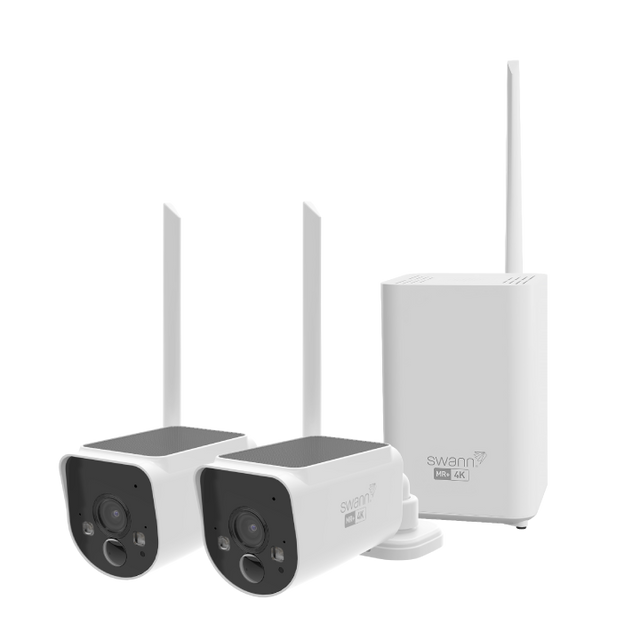
If a wireless solution is needed, we don’t compromise on quality. That’s why our go-to recommendation is the Swann Max Ranger:
- Built-in solar panels for continuous power without daily battery management.
- Own wireless network independent of your home Wi-Fi, eliminating the usual connectivity headaches.
- Reliable performance even in areas where standard wireless cameras struggle.
Max Ranger addresses the two biggest pain points of traditional wireless CCTV: power reliability and connectivity. When we recommend going wireless, this is the solution we trust and so do our customers.
Wireless Alarms Are a Different Story
It’s important to separate wireless alarms from wireless cameras. Modern wireless alarms:
- Operate on a dedicated security frequency, separate from Wi-Fi, reducing interference.
- Have batteries lasting 3 – 5 years, requiring minimal maintenance.
- Are proven, reliable, and widely used.
Concerns about wireless CCTV shouldn’t deter homeowners from choosing wireless alarms, which remain a trusted and mainstream solution.
Choosing the Right System for You
Our job isn’t to install the easiest system but to recommend what’s best for your property. Every assessment is different, and our franchisees take the time to explain options, outline trade-offs, and help you make an informed choice.
Whether that ends up being a hardwired setup or a wireless Max Ranger solution, you can rest assured that your home or business is being protected with a system designed to perform.
Get in touch with your local Jim’s Security franchisee for a free quote today or call 131 546.